Before you visit MONGOLIA
Accessibility
Weather/ Best time to travel
Visa information
Vaccination
Mongolian embassies abroad
While you are in MONGOLIA
Mongolia, a landlocked country in East Asia, shares a 4,709 km border with China to the south and a 3,543 km border with Russia to the north. Spanning 1.566 million square kilometers, it ranks as the 18th largest country globally, with a low population density of roughly 1.5 people per square kilometer. Located at an average altitude of 1,580 meters above sea level, Mongolia’s terrain is characterized by mountains and expansive plateaus.
The Altai Mountains dominate the western and northern regions, gradually giving way to lower plains and depressions in the south and east. The Altai Mountain range, Mongolia’s largest, stretches 1,500 kilometers in the western part of the country, with Mount Khuiten—the highest peak at 4,374 meters—located within. The lowest point, Khukh Lake, lies in the eastern Dornod province at 560 meters above sea level. Expansive steppes prevail in the eastern and southern regions, with the Menengiin Tal steppe being the largest at 250,000 square kilometers.
Mongolia’s diverse landscape supports four primary vegetation zones: mountain forest, steppe, semi-desert, and desert. The country is rich in water bodies, with around 3,000 rivers, including the Orkhon River, the longest at 1,124 kilometers. Mongolia is also home to over 3,000 lakes, with Uvs Lake as the largest by area and Khuvsgul Lake as the deepest.
Mongolia’s climate is a strikingly continental one, influenced by its high elevation, latitude, and distance from any oceanic moisture sources. Known as the “Land of the Blue Sky,” Mongolia experiences around 257 sunny days a year, making it a destination of clear skies and bright horizons. This high-altitude country, averaging 1,580 meters above sea level, is encircled by mountain ranges that block moist winds, creating a dry, extreme climate characterized by long, cold winters and brief, warm summers.
Winter in Mongolia stretches from November through April, with temperatures often plummeting to -20°C, while the short summer (July through September) brings average highs around +20°C. Precipitation is highest in the northern regions, reaching 20 to 35 centimeters annually, while the southern deserts receive just 10 to 20 centimeters. Ulaanbaatar, Mongolia’s capital, lies in the Tuul River valley at 1,351 meters above sea level and receives about 31 centimeters of precipitation each year, most of which falls in July and August.
Mongolia’s weather is also known for its unpredictability, especially in summer when it’s said one can experience “four seasons in a day.” This variability, along with frequent blizzards and spring dust storms, presents challenges to both people and livestock. Rivers and lakes freeze over completely in winter, with smaller streams freezing to the bottom. With its distinctive climate and vast open skies, Mongolia offers a rare and stunning natural environment, drawing visitors with
its wild beauty and resilience.
Mongolia is home to an extraordinary range of natural ecosystems, where Siberian taiga, Central Asian plain, vast steppe, and arid desert converge to create a unique environment rich in biodiversity. This dynamic blend of habitats supports diverse flora and fauna, making Mongolia a captivating destination for international visitors drawn to its unspoiled landscapes, rare wildlife, and pristine natural resources.
A mountainous country, Mongolia boasts three prominent mountain ranges—the Altai, Khangai, and Khentii—featuring ice-capped peaks, green valleys, and dramatic alpine terrain. The high-altitude regions are marked by tundra, alpine sedge meadows, and highland shrubs, with a short, cool growing season. In the east, expansive steppes stretch toward the Manchurian plains, offering a vast grazing area for livestock and supporting distinct plant and animal species. However, the steppe’s delicate ecosystem is vulnerable to overgrazing, agriculture, and other human activities.
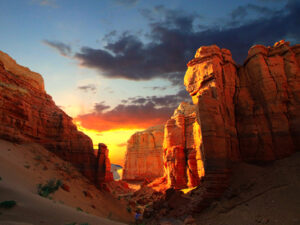
Mongolia’s southern regions are dominated by the deserts, including the world-renowned Gobi, where dynamic landscapes shift from rocky mountains and sand dunes to oasis areas with sparse vegetation. The arid climate here brings intense heat in summer and extreme cold in winter, with limited annual rainfall. In these desert areas, dust storms and drought are common, affecting both the environment and the livelihoods of local herders.
Mongolia’s varied landscapes—from the icy mountains to the rolling steppes and the dramatic Gobi—are a testament to its rugged beauty and ecological diversity, offering visitors a rare and authentic natural experience.
Mongolia boasts a rich history that spans thousands of years. Until the 13th century, the Mongols were a loose confederation of rival clans in northern Asia. It was during this period that a young Mongol named Temujin emerged, successfully uniting most of the Mongol tribes. In 1189, he was honored with the title of Chinggis Khaan, meaning “universal khaan.” Under Chinggis Khaan and his descendants, the Mongolian Empire became the largest contiguous empire in world history by the 13th century. The empire’s power began to wane in the 14th and 15th centuries.
From 1691 to 1911, Mongolia was controlled by the Qing (Manchu) Dynasty. Mongolia’s journey to independence and democracy is a story of resilience and transformation. In 1911, Mongolia declared its independence under Bogd Khan, the spiritual leader of Tibetan Buddhism in Mongolia. However, both the China and the Russian Empire initially refused to recognize Mongolia’s independence, though Mongolia retained an autonomous status.
In 1921, Mongolia’s People’s Revolution, aided by the Russian Red Army, led to Mongolia becoming the world’s second socialist state. After Bogd Khan’s passing in 1924, the Mongolian People’s Republic was established, with its first constitution solidifying a Soviet-aligned Communist regime that would govern for nearly 70 years.
Change swept through Mongolia in 1990, inspired by the Soviet Union’s reforms and the fall of Communist regimes in Eastern Europe. A peaceful democratic revolution ended the Communist era. This dramatic shift ushered in a multi-party system, a new constitution, and a market-driven economy. In just over two decades, Mongolia has blossomed from a socialist state into a vibrant democracy with growing economies. Today, it stands as a dynamic nation with a proud heritage, thriving on a new path of economic opportunity and democratic freedom. This enduring history has shaped Mongolia’s unique cultural legacy, blending the power of ancient empires with its evolution into a modern nation.
Mongolia is a fascinating blend of ancient nomadic traditions and vibrant modernity. As of 2024, Mongolia’s population stands at 3.4 million, with a unique demographic profile that reflects its vast, open landscape and rich heritage. With only 2 people per square kilometer, Mongolia has one of the world’s lowest population densities. The population is young, with a median age of 26.9, and 67% of Mongolians live in urban areas. Women make up slightly over half of the population, at 50.5%.
At the heart of Mongolia’s cultural identity are the Khalkha Mongols, who make up 84.5% of the population. Descended from the lineage of Chinggis Khan, the Khalkha are considered the primary bearers of Mongolian culture and tradition. Khalkh, the dominant Mongolian language, is understood throughout Mongolia and among Mongolian communities in Central Asia, serving as the foundation of the Mongolian linguistic heritage. In addition to the Khalkha, Mongolia is home to over 20 distinct ethnic groups, including Kazakhs, Dörvöd, Bayad, Buryat, and Dariganga.
The Kazakhs, Mongolia’s largest non-Mongolian ethnic group, are of Turkic descent and primarily Muslim, with strong cultural ties to Kazakhstan. Originally developing their ethnic identity in the 15th century, they later became part of Russia’s Central Asian territories through a series of annexations in the 19th century. Many Kazakhs in Mongolia have recently emigrated back to Kazakhstan, yet they continue to play a vibrant role in Mongolia’s multicultural landscape.
The Oirat and Buryat peoples also add to Mongolia’s ethnic mosaic. The Oirat, who arrived in western Mongolia centuries ago, are descended from a western Mongol lineage and maintain their heritage through traditional herding practices. The Buryat, a northern Mongolian group with roots in Siberia, primarily live along the Russia-Mongolia border near Lake Baikal, the ancestral homeland of their forebears.
With a deep-rooted history and a dynamic cultural landscape, Mongolia is a unique and inspiring destination where centuries-old traditions meet the rhythms of modern life, offering visitors an authentic glimpse into one of the world’s most enduring cultures.
Political system
Mongolia’s political journey reflects its resilience and desire for independence. After 200 years under Qing rule, Mongolia declared independence in 1911, appointing Bogd Khan as leader. In 1921, with support from the Russian Red Army, Mongolia became the world’s second socialist country. Following Bogd Khan’s death, it became the People’s Republic of Mongolia, operating as a one-party state under Communism.
In 1990, inspired by changes in Eastern Europe, Mongolia’s democratic revolution overthrew the Communist regime, leading to a multi-party system. A new constitution in 1992 established a free-market economy and rebranded the country as Mongolia, embracing democratic values. Today, the State Great Khural, a 126-seat parliament, elects the President and governs through multi-party elections in all 21 provinces. All citizens over 18 are eligible to vote, with elections requiring at least 50% turnout for validity.
Mongolia’s political evolution highlights its commitment to democracy, emerging as a vibrant, self-governed nation.
Administrative units
Mongolia is divided into 21 provinces, known as aimags, along with its capital city, Ulaanbaatar. Each province boasts unique cultural and natural attractions, making them ideal destinations for travelers seeking authentic experiences. The provinces are further divided into 333 soums (regional districts), which are then broken down into 1,664 bags (small communities or hamlets).
The South Gobi province covers an impressive area of 165,400 square kilometers, featuring expansive desert landscapes, dunes, and rugged mountains. Khuvsgul province, known for its breathtaking Khuvsgul Lake, has the largest provincial population, with around 121,900 residents. This region offers vibrant local communities and is a gateway to Mongolia’s rich nomadic culture.From the iconic steppe and desert landscapes of South Gobi to the serene waters and forested mountains of Khuvsgul, Mongolia’s diverse administrative regions invite visitors to explore distinct cultural heritages, natural wonders, and traditional lifestyles.
Post & Communication
Mongolia’s communication history dates back to the 13th century when Chinggis Khaan and his successors established the Urtuu relay system, an empire-wide network of messenger and postal stations across the vast Mongol Empire. Under Khublai Khaan’s Yuan Dynasty, this advanced network expanded to include China, facilitating the swift delivery of official correspondence, military orders, and diplomatic messages across continents.
These relay stations, spaced 15 to 40 miles apart, served not only for mail delivery but also offered essential amenities to traveling officials, foreign dignitaries, and traders. Couriers were provided with food, shelter, and fresh horses, allowing them to cover impressive distances of 20-30 miles per day. Historical accounts from visitors, such as Marco Polo, indicate the remarkable efficiency of this early postal system, which enabled the Mongol Empire to maintain communication across thousands of miles.
The modern system of communication in Mongolia began in 1898 when the first telephone line connected Khyahta with Ikh Khuree (current Ulaanbaatar). By 1914, the capital had its first 60-line telephone network, laying the foundation for further advancements in connectivity.
Today, calling internationally from Mongolia is straightforward. The country’s phone code is +976, and most hotels in Ulaanbaatar offer direct international calling. Mongolia’s mobile network operates on GSM, making it compatible with GSM phones from abroad. Travelers can easily purchase a local SIM card from leading providers—Mobicom, Skytel, Unitel, and G-Mobile—or opt for roaming, though international roaming reliability can vary.
In Ulaanbaatar, internet connectivity is strong and widely available. Most hotels, cafes, and service providers offer free, high-speed Wi-Fi, with 4G coverage extending across the capital. While rural connectivity is more limited, GSM and mobile internet coverage is steadily expanding to reach nearby provincial centers and villages, keeping travelers connected even in Mongolia’s vast open landscapes.
From the ingenuity of the Urtuu postal relays to today’s modern networks, Mongolia’s communication systems continue to evolve, balancing ancient heritage with cutting-edge technology to support the needs of residents and visitors alike.
Education in Mongolia
Mongolia boasts a well-established and extensive education system with a literacy rate of 98.7% as of 2023—an impressive achievement for a developing country. Education has long been a priority in Mongolia, and the nation’s commitment to accessible, high-quality education has transformed the landscape over the past century.
Prior to the 1921 revolution, Mongolia had no formal schooling system. Boys learned to read and write in Tibetan and Mongolian in monasteries, while children from elite families received private education at home. Following the revolution, Mongolia embarked on creating its first public schools to provide free education for all, building a foundation for universal literacy and educational attainment.
Modeled initially after the Soviet system, Mongolia’s education system offered a structured, ten-year program that has since evolved to align with European standards. Today, children begin primary school at age 6, progressing through five years of primary education, four years of middle school, and three years of high school. Compulsory education lasts nine years, with the school year beginning on September 1.
By 2022, Mongolia’s network of 820 primary and secondary schools included 662 public schools and 158 private institutions, providing students with a variety of options. Higher education, introduced after the revolution, follows a Soviet-inspired framework. The National University of Mongolia, established in 1942 in Ulaanbaatar, was the nation’s first university and remains one of its most respected, initially offering programs in education, medicine, and veterinary science.
Today, Mongolia’s higher education sector includes 94 universities and colleges that serve over 157,000 students. While tuition was introduced after the 1990s, the government and institutions offer scholarships to support students.
With a deep-rooted appreciation for learning, Mongolia continues to prioritize education for future generations, fostering a culture that values knowledge as a key to national progress and individual growth.
Health
Mongolia’s healthcare system has grown from a unique blend of ancient healing traditions and modern medical practices, creating a healthcare landscape that reflects both its rich cultural heritage and recent advancements. Before the arrival of Soviet assistance in the 1920s, healthcare in Mongolia was largely limited to traditional practices provided by local healers and monks who used herbal medicine, acupuncture, massage, bone-setting, and prayer to treat illness. These methods, deeply rooted in Mongolia’s nomadic way of life, remain popular even today and are seen as valuable complements to modern medicine.
The era of modern healthcare in Mongolia began in 1925 with the establishment of the first “People’s Hospital” by the Russian doctor Shastin, P. N. equipped with 15 beds. The socialist period saw a significant expansion of healthcare services, with policies focused on building a network of hospitals, clinics, and maternity homes across Mongolia. By the 1930s, the first hospitals and maternity centers in Ulaanbaatar were fully staffed by trained doctors and nurses, primarily under the guidance of Soviet medical professionals. During this period, medical treatment was entirely government-funded and free for all citizens, leading to a robust healthcare infrastructure and improved public health outcomes.
Following the transition to democracy in the 1990s, the healthcare system faced challenges with reduced funding, prompting reforms. In 1994, Mongolia introduced a national health insurance program and allowed private healthcare services, paving the way for an increasing number of private hospitals and clinics, particularly in Ulaanbaatar. These private facilities have significantly improved access to quality healthcare, and as a result, infant and overall mortality rates have continued to decline steadily.
In addition to healthcare, Mongolia has developed a strong social welfare system that supports various needs, including childcare, single-parent households, disability, and pensions. Unemployed individuals can register with employment agencies and receive government benefits, ensuring a safety net for citizens. However, despite these resources, many young Mongolians seek employment abroad in countries such as South Korea, Sweden, Czechia, Hungary, and the United States, driven by economic opportunities and career advancement.
Today, Mongolia’s healthcare and social welfare systems reflect both resilience and growth, balancing modern medical practices with time-honored traditions, and striving to meet the needs of a dynamic population.
Religion in Mongolia
Buddhism has shaped Mongolian culture, spirituality, and national identity across centuries, undergoing three significant waves of introduction. First brought to Mongolia from India in the 6th century, Buddhism’s influence strengthened during the 13th century and flourished in the 16th century as Tibetan Buddhism became a unifying force and symbol of nationalism.
In 1578, Abtai Sain Khan, a prominent Mongolian leader, invited a high-ranking Tibetan monk to Mongolia, initiating an era of religious devotion and national unity. During this period, Altan Khan, a powerful nobleman, bestowed the title “Dalai Lama” upon the Tibetan spiritual leader, a term meaning “Ocean of Wisdom.” This honor cemented the relationship between Mongolia and Tibetan Buddhism, leading to the construction of Mongolia’s first monastery, Erdene Zuu, in 1586.
One of Mongolia’s most influential religious figures, Zanabazar, known as the “Undur Gegeen” became the country’s spiritual leader in the 17th century. A direct descendant of Chinggis Khaan, Zanabazar promoted Buddhism’s spread, leading to the construction of more than 2,000 monasteries by the 20th century. With over 40 percent of the male population becoming celibate monks, these monasteries evolved into vibrant cultural centers with schools for art, and astronomy, fostering both religious and intellectual life.
By the 1930s, under the influence of Stalin, the Mongolian government launched an anti-religion campaign that destroyed over 700 monasteries and drastically reduced the number of practicing monks from 15,000 to just a few hundred. Precious artifacts were transported to the Soviet Union and melted down, yet many Mongolians secretly preserved their Buddhist beliefs. Family altars displayed images of Buddha alongside Lenin, and religious treasures were hidden, waiting for safer times.
With the collapse of communism and democracy in the 1990s, Buddhism experienced a powerful revival. More than 155 monasteries were reopened, and the ancient faith was rekindled in both urban and rural Mongolia. Today, around 50% of Mongolians identify as Buddhists, with 39% unaffiliated, 3% following Islam, 3% practicing traditional Mongol shamanism, 2% identifying as Christian, and 0.4% following other religions.
Buddhism’s legacy in Mongolia remains a testament to its resilience, playing a vital role in Mongolian art, education, and cultural identity. It continues to inspire a deep spiritual connection in Mongolian life, balancing traditional practices with modern influences and contributing to a unique cultural heritage admired worldwide.
Buu (Shaman) – Shamanism in Mongolia is a profound spiritual practice rooted in the belief that all beings—humans, animals, plants—are animated by conscious souls. Central to shamanism is the shaman, an individual with the unique ability to connect with the spirit world through trance states, practicing healing, divination, and guidance on behalf of their community.
Archaeological evidence indicates that Mongolian shamanism dates to the Neolithic period. By the 13th century, shamanism was the dominant religious system among the Mongol tribes. Shamans played powerful roles during Chinggis Khan’s reign, performing rituals to invoke weather magic, secure victory in battle, and gain favor for the warriors. However, the influence of Tibetan Buddhism began to spread in the 16th century, gradually reducing the prominence of shamanistic practices.
The democratic transition in the 1990s marked a period of revival for shamanism. Facing rapid economic and social changes, Mongolians began to seek a renewed sense of cultural identity, and shamanism emerged from the shadows as a symbol of true Mongolian heritage. New generations of shamans came forward, reawakening their ancestral spirits, often trained by elder shamans to carry on traditions that had been suppressed during the communist era. In 1996, a Shamanic Center was established, and today, Mongolia has over 20,000 registered shamans and ten institutions dedicated to this ancient practice.
At the heart of Mongolian shamanism is the veneration of Eternal Heaven and Mother Earth, connecting all beings across three realms: the 99 heavens, the 88 levels of earth, and the sunlit world of living beings. During ceremonies, shamans use rhythmic drumming, dance, and song to summon their spirit helpers. Through trance, they interact with ancestral and nature spirits, seeking solutions to illness, personal challenges, and community concerns. This ancestral legacy serves as a bridge between the natural and spiritual realms, embodying Mongolia’s enduring respect for the forces of nature and family harmony.
Today, Mongolian shamanism is not only a spiritual practice but also a testament to the resilience of Mongolia’s cultural identity, offering a unique glimpse into a tradition that balances ancient wisdom with the dynamic realities of modern life.
Mongolia, one of the last strongholds of true nomadic culture, is renowned for its rich herding traditions and deep connection to livestock. Mongolian nomads move two to four times a year, following the natural grazing cycles across vast terrains that range from forested areas to open steppe and the rugged Gobi Desert. This mobile lifestyle has been central to Mongolian life since the era of the Hun Empire, as herders continue to raise the “five animals”: sheep, horses, cattle, camels, and goats.
With over 64.6 million livestock as of 2023—comprising 29.4 million sheep, 24.6 million goats, 5.3 million cattle, 4.8 million horses, and 473,000 Bactrian camels—Mongolia truly is a land defined by its animals. These animals are essential not only to the herders but to the Mongolian economy. Sheep and goats provide meat, wool, and leather, while cattle and yaks are valued for meat, milk, and hides. The yak, particularly prized for its rich milk and strength, is often crossed with cattle to produce the hainag, a hardy, milk-producing hybrid that is also used for heavy labor.
Horses, iconic to Mongolia, are valued for both transport and milk. Mares are milked regularly, and foals are allowed to start the milking process to encourage milk flow. Camel herds, though smaller, are essential in the desert regions for transport and wool; their thick, warm fur is especially valued, though camels are seldom milked or used for meat.
Mongolian herders live in the traditional ger, a felt-covered dwelling that can be dismantled and reassembled as families move with their herds. They navigate Mongolia’s four extreme seasons, relocating as needed to ensure their animals access the best grazing pastures. Mongolian livestock naturally lead the way to lush pastures, reflecting a harmonious connection between herders and the land that has sustained them for generations.
Mongolia’s nomadic lifestyle is a rare and resilient tradition, offering visitors an authentic glimpse into one of the world’s last surviving pastoral cultures.
The Mongolian ger—not a “yurt,” as some might call it—is a symbol of Mongolian tradition and resilience. Ideally suited to Mongolia’s extreme climate and nomadic lifestyle, this round, portable dwelling consists of a sturdy wooden framework and insulating felt cover. While modern apartments and homes are becoming common in Ulaanbaatar, many rural Mongolians still live in gers, an essential part of their culture and daily life.
Historically, gers were non-collapsible and required transport by yak carts. Today, however, they are designed to be disassembled and packed onto animals, making relocation easy as nomads move with the seasons. Each ger has two key components: a wooden framework or lattice wall and felt cover. The frame includes the central support poles and a smoke hole or ring roof. The structure is usually set up to face south, letting sunlight into the otherwise windowless interior.
The interior layout is simple yet meaningful. Traditionally, the western side belongs to men, who store bridles, airag, and arkhi (vodka), while the eastern side is for women’s kitchen utensils and personal items. The khoimor, directly opposite the door, is a place of honor, housing valuables and often a small Buddhist shrine or family photos. Guests are often invited to sit here, as it’s the most respected area in the ger.
The ger’s circular design withstands Mongolia’s fierce winds, while the felt covering provides quick drying when wet. In Ulaanbaatar and other towns, ger districts are on the city’s outskirts, often housing residents who seek a summer escape from hot, cramped apartments to enjoy Mongolia’s open skies in their beloved gers.
Mongolia’s extreme climate has shaped a unique culinary tradition that reflects the resilience and resourcefulness of its people. During harsh winters, Mongolians rely on hearty, protein-rich foods, with meats like mutton, beef, and even horsemeat providing essential energy. In summer, they shift to a lighter diet based on dairy products, known as “White Food,” to cleanse and balance the body. These include milk, yogurt, aaruul (dried curd), Mongolian butter, urum (a thick cream), and other dairy delights, each symbolizing purity and kindness.
Airag – a traditional drink made from fermented mare’s milk, is a symbol of hospitality and celebration in Mongolia. Produced in summer, the milk is churned thousands of times in a leather bag until it reaches a mild, tangy flavor and a low alcohol content. This beloved drink is central to events like the Naadam festival, weddings, and New Year celebrations. Known for its health benefits, Airag is believed to strengthen the body and aid digestion. If you’re visiting a Mongolian family, expect to be offered a bowl of Airag—a sip or two is customary if you’re unfamiliar with the taste.
Boodog (Mongolian Barbecue) is a unique barbecue method, often made with marmot or goat. The animal is skinned and cleaned, with hot stones placed inside the body cavity to cook the meat from within. This method results in tender, flavorful meat infused with the aroma of hot stones. Boodog is a staple at gatherings and a must-try for adventurous eaters!
Khorkhog– Another iconic dish, Khorkhog is prepared by placing cuts of mutton or goat, along with hot stones, inside a container to cook the meat. The stones retain heat, evenly cooking the meat and adding a smoky flavor. Khorkhog, initially used by Mongolian soldiers on campaigns, is now a favorite at family gatherings, usually prepared by men in traditional cooking styles.
Milk Tea -A staple in Mongolian households, milk tea is prepared with brick tea, milk (from cows, camels, or sheep), salt, and sometimes rice or dumplings for added heartiness. Mongolians drink this salty tea several times a day, with elders often consuming 1-3 liters daily. Considered a comfort drink, it’s also used in traditional medicine to soothe colds and fatigue.
Mongolian vodka – Mongolian families have passed down the art of vodka-making for generations. Traditional arkhi is made from cow’s milk, using a unique distillation process that produces a pure and smooth drink. In Mongolian culture, it’s customary to pour the first few drops into the fire as an offering, and the quality of the vodka is judged by the clarity of its blue flame.
Borts – Mongolia’s nomadic way of life calls for practical food preservation methods, like air-drying meat. The strips of beef are dried until hard and then powdered for easy transport. When needed, a handful is added to boiling water for a nourishing broth—a simple, hearty meal that has sustained herders for centuries.
From Airag to Arkhi, Mongolia’s culinary traditions reflect the strength and warmth of its culture. A taste of Mongolia is an invitation to explore its rich history, distinctive customs, and the hospitality that defines this extraordinary land.
The traditional dress of the Mongolian people is a vivid expression of their heritage, embodying centuries of cultural history and a unique nomadic way of life. Mongolian attire varies according to age, gender, marital status, and occasion, making it rich in symbolism and practicality. Elders typically wear modest, simple garments, while younger women’s outfits often differ based on whether they are married or single.
Hat – One of the most striking aspects of Mongolian dress is the traditional headwear, which comes in a vast array of shapes, colors, and styles. Hats differ by season, purpose, gender, and social occasion—ranging from winter hats to ceremonial headpieces, and everyday wear to festival finery. Each design reflects the individual’s tribal affiliation or nationality, making Mongolian headwear as distinctive as it is vibrant.
Women’s holiday headwear is particularly elaborate, featuring luxurious materials and intricate details. These headpieces are often crafted from silk and velvet, with lower sections made of velvet and upper sections of rich red silk. They are adorned with coral, pearls, mother-of-pearl, and turquoise, creating a stunning display of craftsmanship. Women’s hats tend to be more ornate than men’s, with decorative ribbons and embellishments that showcase Mongolian artistry at its finest.
Deel – An iconic Mongolian garment, a deel is a loose, tunic that embodies comfort, practicality, and centuries of tradition. It is crafted as a single piece with long sleeves, a high collar, and a unique closure on the right shoulder. Each ethnic group in Mongolia has its own distinctive style of Deel, characterized by variations in cut, color, and trim, reflecting rich cultural diversity.
There are three main types of Deels, designed for each season. The Dan Deel is lightweight and made from bright, airy materials, worn by women during late spring and summer. The Terleg is slightly padded, suitable for both men and women, while the winter Deel is heavily insulated, lined with sheepskin or layers of cotton, offering warmth even in the harshest climates. While men and women wear the same basic cut, men’s Deels tend to be broader with more subdued colors, while women’s versions feature brighter shades.
Deels also vary by occasion. Everyday Deels come in gray, brown, or other dark tones, while holiday Deels shine in vibrant blue, green, or claret silk, complemented by a striking silk sash several meters long. This sash isn’t merely decorative; it has practical purposes, providing added warmth and stability.
One of the Deel’s unique features is its wide, cup-shaped sleeves, affectionately called “hooves.” Far from just stylish, they serve a functional purpose, protecting hands from the cold and offering an extra layer of protection during demanding work. The Deel is more than clothing—it’s a true expression of Mongolian heritage, designed to withstand both the climate and the demands of a nomadic lifestyle.
Boots – Mongolian boots, with their distinct upturned toes, are as practical as they are unique. This iconic design isn’t just for looks—the upturned toe helps keep a rider’s feet securely in the stirrups and minimizes impact on the ground, preserving soil and terrain while walking.
Crafted from thick, rigid leather, these tall boots are built to last, with intricate leather appliqués decorating the tops. Both boots are designed with the same shape, with no distinction between left and right, offering a universal fit that’s easy to slip on and off without the need for laces or zippers. This feature makes them quick to wear, even when on the go.
Mongolian boots are also versatile across all seasons. In winter, they can be paired with thick felt socks for warmth, while in summer, they provide a durable, comfortable option without extra layers. Designed to endure the elements and embody Mongolian heritage, these boots are a perfect blend of tradition, style, and rugged functionality.
Accessories – Mongolian accessories are an exquisite showcase of craftsmanship, typically crafted from silver and adorned with pearls and corals. Mongolian women often wear intricate coral and pearl headpieces, and striking silver earrings embellished with pearls, highlighting a heritage of elegance and artistry.
To experience Mongolian traditional attire at its finest, visit during the national festivals: Tsagaan Sar (Lunar New Year) and the Naadam Festival. During these celebrations, you’ll see nearly everyone, especially the elderly, dressed in traditional clothing, whether in the bustling city or countryside. Younger generations bring a modern twist, blending traditional designs with contemporary style for a fresh, fashionable take on classic Mongolian dress.
Mongolian music is a deeply cherished cultural heritage, with each style capturing the spirit of Mongolia’s vast landscapes and nomadic life.
Morin Khuur, or horse-headed fiddle, is Mongolia’s most beloved instrument. Crafted from wood and adorned with a horse’s head at the tip of its neck, this two-stringed fiddle is known for its rich, soulful sound that mimics the rhythms and movement of horses. Hand-made and often costly, it’s a symbol of wealth and tradition, cherished in every Mongolian home. Played with a bow of horsehair, the Morin Khuur accompanies Mongolia’s traditional long and short songs, as well as the classical bielgee dance, making it essential at Naadam, weddings, Tsagaan Sar, and other grand celebrations.
Mongolia’s music is a sensory journey through its history, landscapes, and cultural pride. Whether through the haunting Long Song, the lively Short Song, or the ethereal notes of the Morin Khuur, these traditions continue to resonate across generations.
Song – A treasured tradition for over 800 years, the Mongolian long song is an ancient vocal style that has endured through generations. Sung during weddings, festivals, and ceremonies, it’s a profound expression of nomadic life and the limitless steppe. In these haunting, melancholic songs, the singer holds notes as long as possible while modulating vowels, evoking the solitude of the nomad and the vastness of the landscape. This style stands in contrast to the short song—a livelier, often humorous form with themes of love, homeland, horses, and beauty. Though technically less demanding, Short songs are an everyday staple of Mongolian life, bringing joy and vibrancy to gatherings.
The Ode, or “magtaal,” is a hymn of praise that remains integral to Mongolian culture. Its roots lie in shamanic poetry, with lyrics dedicated to sacred mountains, victorious wrestlers, or revered horses. Every Naadam festival includes this epic form, celebrating Mongolia’s heroes, natural wonders, and triumphs.
Khoomii, or Mongolian throat singing, is a unique and ancient vocal technique that allows a singer to produce multiple harmonized notes simultaneously. Inhaling deeply, the singer channels air through a constricted throat while the tongue modulates breath, creating harmonies that echo nature’s sounds, from soft breezes to birdsongs. Linked to shamanistic traditions, Khoomii is a mesmerizing tribute to Mongolia’s landscapes.
Bielgee is a captivating dance style unique to the people of western Mongolia, blending storytelling with expressive movement. Danced to the melodies of traditional Mongolian instruments, like the morin khuur (horse-headed fiddle) and yochin, Bielgee performances are typically set within a ger (traditional yurt). With limited space, dancers use subtle, rhythmic motions to communicate elements of their identity, including gender, tribe, and ethnicity.
This traditional dance is a vivid pantomime, with dancers embodying scenes from nomadic life—like milking cows, cooking, or hunting—through expressive gestures. With graceful, rhythmic sways, dancers also mimic the lively movements of horses, capturing the spirit of Mongolia’s herding culture. Bielgee isn’t just a dance; it’s a living portrait of Mongolia’s heritage, skillfully brought to life in every movement.
Ballet – In the 1950s, Mongolia’s ballet scene was born through a cultural exchange with the Soviet Union, as Mongolian artists traveled to study classical arts and Soviet experts helped establish theaters and conservatories. Mongolia’s first ballet, The Fountain of Bakhchisaray by Boris Asafiev, debuted in 1956, showcasing the early talent of Mongolian dancers. By 1975, world-renowned ballets like Swan Lake and Giselle were part of the repertoire, bringing international classics to Mongolian audiences.
Today, Mongolia’s ballet repertoire includes Tchaikovsky’s Swan Lake and The Nutcracker, Shostakovich’s The Limpid Stream, and Prokofiev’s Romeo and Juliet, along with beloved Mongolian ballets such as S. Gonchigsumlaa’s Khoshuu Naadam and Z. Khangal’s Treasure Girls. The fusion of global and national works highlights the skill and versatility of Mongolian ballet artists.
Opera – Mongolian opera also blossomed with Soviet guidance. While early forms of Mongolian opera, like Saran Khukhuu, were unique to the culture, the modern era began after the People’s Revolution of 1921. Soviet specialists arrived in the 1930s to help develop Mongolian opera, and by 1934, Mongolia’s first modern opera, “The Three Sad Hills” by D. Natsagdorj, premiered as a national tragedy. Since 1963, Mongolian opera singers have performed the world’s most beloved operas on stage.
Today, the State Academic Theatre of Opera and Ballet features over 100 national and international works, including Don Giovanni, The Magic Flute, Aida, Carmen, and Prince Igor, alongside Mongolian operas like B. Sharav’s Chinggis Khaan and Tears of Lama. In 2023, The Mongol Khan captivated audiences at the London Coliseum, reflecting the global appeal of Mongolian opera talent. The theater’s performers, including renowned baritones, have gone on to grace the stages of La Scala and the Bolshoi Theatre.
Pop Culture – Since Mongolia’s urbanization in the 1970s, its modern music scene has flourished with jazz, rock, pop, and hip-hop capturing the hearts of younger generations. Among Mongolia’s most internationally successful acts is The Hu, a folk-metal band formed in 2016. Combining traditional Mongolian instruments like the morin khuur (horse-headed fiddle), tovshuur, and throat singing, The Hu created “hunnu rock,” a genre inspired by the ancient Xiongnu empire. Their music, often featuring ancient Mongolian poetry and war cries, has introduced Mongolian culture to fans worldwide and solidified their place on the global music scene.
From ballet and opera to modern rock, Mongolia’s performing arts celebrate a dynamic blend of tradition and innovation, appealing to audiences at home and across the world.
Cinema
Cinema arrived in Mongolia in the 1910s, captivating audiences in the capital city where the first screenings took place at the American Consulate and Russian Stock Exchange hotel. By 1913, Mongolian prince Namnansuren brought films from Russia to showcase at Bogd Khan’s residence, marking the beginning of film culture in Mongolia.
After the 1921 revolution, Mongolia invested in cinematic equipment and trained students in Russia, making films more accessible to the public. Known initially as “Shadow Shows” and offered free of charge, cinema quickly grew in popularity. In the 1930s, the first theater, “Ard,” opened, and in 1935, with Soviet support, the Mongol Kino production company was established. Its first release, a documentary titled Celebration of 1st May, set the stage for Mongolia’s cinematic journey.
By the late 1930s, Mongolian filmmakers began producing movies independently, with Norjmaa’s Way (1938) and Wolves (1939) marking their early successes. The iconic director D. Jigjid brought Mongolian cinema international recognition with classics like People’s Messenger (1959). Following Jigjid, a new generation of filmmakers—H. Damdin, B.Baljinnyam, and others—propelled Mongolian cinema forward, each contributing unique visions.
The 1990s saw a cinematic renaissance, with over 20 private studios emerging and producing more than 100 films. Mongolian cinema expanded internationally through collaborations with French, Japanese, and Chinese filmmakers, with these joint productions gaining recognition at global festivals. This vibrant history underscores Mongolia’s dynamic journey in cinema, from “Shadow Shows” to an internationally celebrated film industry.
Fine Art
Mongolian fine arts are renowned for their rich heritage, spanning from ancient cave paintings to masterpieces in classical painting. The oldest known artwork in Mongolia, the Khoid Tsenkher cave paintings in Khovd, date back 3,000 to 8,000 years, revealing Mongolia’s early connection to visual storytelling.
Mongolian art flourished with the rise of the Mongol Empire in the 12th century, blending local styles with influences from other cultures. The empire’s capital, Kharkhorin, became an architectural marvel, reflecting the grandeur of the Mongolian Empire. From the 16th to the early 20th centuries, as Buddhism spread, religious arts and temple-inspired architecture grew, with beautiful monasteries showcasing intricate designs that embodied Mongolia’s spiritual heritage.
Modern Mongolian painting also shines with iconic works such as U. Yadamsuren’s The Old Horse-Fiddler, A. Senghetsokhio’s The Mongol Lady, B. Avarzed’s Uurgach, and Ts. Minjuur’s Caravan Guide. These classic pieces capture the heart of Mongolian culture and nomadic life, continuing a legacy of artistic excellence. Discover Mongolia’s remarkable art—a fusion of ancient tradition, imperial majesty, and vibrant cultural expression.
Modern Fine Art
Following the 1921 Revolution, Mongolia embraced a new social system that prioritized the arts, inspiring artists to capture the spirit of change and progress. Mongolian artists began blending traditional methods with European styles, creating a unique fusion in Mongolian art. Specialized institutions were established to nurture artistic talent, and by the 1950s, a range of fine arts genres, including carpet weaving and porcelain-making, were flourishing.
During this period, artists like O. Tsevegjav, U. Yadamsuren, and N. Tsultem became renowned for their depictions of animals, workers, history, and everyday life, while architect S. Choimbol gained fame for his striking monuments. In the 1960s, Mongolian art underwent a transformation as artists explored new techniques, colors, and themes. The 1970s and 80s introduced masters like D. Amgalan in xylography and G. Soosoi in monumental arts, expanding Mongolia’s artistic landscape.
The arrival of democracy in the 1990s opened new doors for Mongolian artists, providing opportunities to study abroad and experiment with abstract and impressionist styles. Today, Mongolian art is a vibrant blend of traditional heritage and global influence, offering visitors a unique insight into Mongolia’s dynamic cultural evolution.
Painting
Mongolian painting has roots stretching back over two thousand years, beginning with ancient rock drawings. By the 8th century, Uighur paintings show that art was thriving in Mongolia and across Asia. As Buddhism spread, it became a central theme in Mongolian art, inspiring beautiful and intricate religious paintings. A key figure in modern Mongolian art, B. Sharav bridged traditional and contemporary styles with his iconic works like One Day in Mongolia, vividly depicting Mongolian life.
European influence later enriched Mongolian painting, giving rise to celebrated artists such as L. Gavaa, O. Tsevegjav, and Ts. Dorjpalam. Known both in Mongolia and internationally, these painters played a vital role in blending traditional techniques with modern approaches, training generations of new artists along the way.
Today, Mongolia’s art scene is vibrant and evolving, with young artists experimenting with diverse styles while staying rooted in national tradition. For those drawn to the richness of cultural heritage and the innovation of modern art, Mongolian painting offers a unique and captivating experience.
Sculpture
Ancient deer stone carvings stand as remarkable historical monuments across Mongolia, showcasing the early skill and depth of Mongolian sculpture. These carved stones reveal a thriving art culture that flourished in ancient times. In the 17th century, the renowned sculptor and spiritual leader Undur Gegeen Zanabazar laid the foundation for Mongolian sculpture with his creation of the 21 Taras (consorts of Buddha), capturing the grace and beauty of the Mongolian woman in exquisite form. His work pioneered a tradition of honoring the human form in Mongolian art.
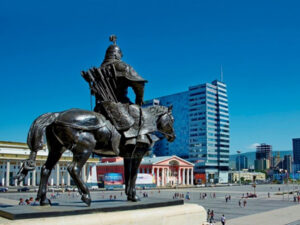
Today, sculptors like S. Choimbol, A. Davaatsren, N. Jambai, and L. Dashdeleg carry on this legacy, enriching Mongolia’s artistic landscape. Among the most iconic works is S. Choimbol’s monument to D. Sukhbaatar—a symbol of Mongolia and a striking portrayal of the Mongolian horse-rider that leaves a lasting impression on visitors.
As Mongolia’s art scene continues to evolve, a new generation of artists is poised to add their voices to this centuries-old tradition, creating sculptures that celebrate Mongolia’s history and cultural heritage. Discover the legacy of Mongolian sculpture—a blend of ancient artistry and modern expression that continues to captivate and inspire.
Mongolia, a land of resilient spirit and vast landscapes, holds a rich heritage where sports are deeply woven into its cultural identity. The competitive ethos of Mongolian sports stems from a nomadic lifestyle marked by horseback riding, hunting, and community pride. Today, traditional sports not only echo Mongolia’s nomadic past but stand as powerful symbols of national pride, especially during Mongolia’s largest celebration, the Naadam Festival.
Traditional Sports – The “Three Manly Games”
Wrestling -Mongolian wrestling, or Bökh, is a test of strength, stamina, and patience, where 512 wrestlers compete in a thrilling elimination tournament. In this timeless sport, two competitors aim to make the other touch the ground, and a single match can last anywhere from a few seconds to several hours. Wrestlers are paired strategically, and without weight categories, each match tests the skill and resilience of the fighters. The most celebrated matches take place at the Naadam Festival, where wrestling has social and spiritual significance, and champions are hailed as national heroes.
Archery – With roots in ancient hunting traditions, archery remains a valued Mongolian sport. Participants shoot arrows at small cylindrical targets from distances of up to 100 meters, with men and women competing side by side—unique among Naadam sports. While archery requires precise skill and dedication, it has a lasting presence in Mongolian culture, passed down from generations of hunters and warriors. Local competitions take place year-round, but Naadam is the pinnacle for Mongolian archers.
Horse Racing – Unlike Western racing, Mongolian horse racing is a long-distance event that showcases the endurance and agility of Mongolia’s finest horses, raised by dedicated trainers called uyaach. Children as young as five race across vast steppes in races of intense stamina and skill. Horses hold sacred status in Mongolian culture, with horse racing symbolizing their historic role in the Mongolian empire’s success. Each race honors these noble animals, blending sport with spiritual reverence.
In recent years, Mongolia has gained acclaim in global sports, with judo, boxing, and sumo bringing pride to the nation.
Sumo – Mongolian wrestlers have reigned in Japan’s elite sumo circles for over a decade, producing legendary yokozunas such as Asashoryu Dolgorsürengiin Dagvadorj and Hakuho Munkhbat Davaajargal. Mongolians follow sumo fervently, with the success of Mongolian champions uniting fans across the country.
Boxing – Boxing took center stage when Enkhbat Badar-Uugan won Mongolia’s second Olympic gold in 2008. His victory inspired a generation of young boxers, propelling Mongolia to global success. Since then, Mongolian boxers have secured numerous world championships and Olympic medals, proudly representing their homeland.
Judo– Judo gifted Mongolia its first Olympic gold, won by Naidan Tüvshinbayar in 2008. His victory brought nationwide celebrations and inspired a surge in young judo athletes. Mongolian judokas have since continued to excel on the world stage, winning titles and bringing honor to the nation.
From the ancient Three Manly Games to modern triumphs in judo and boxing, Mongolia’s sports and culture continue to inspire national pride and international admiration.
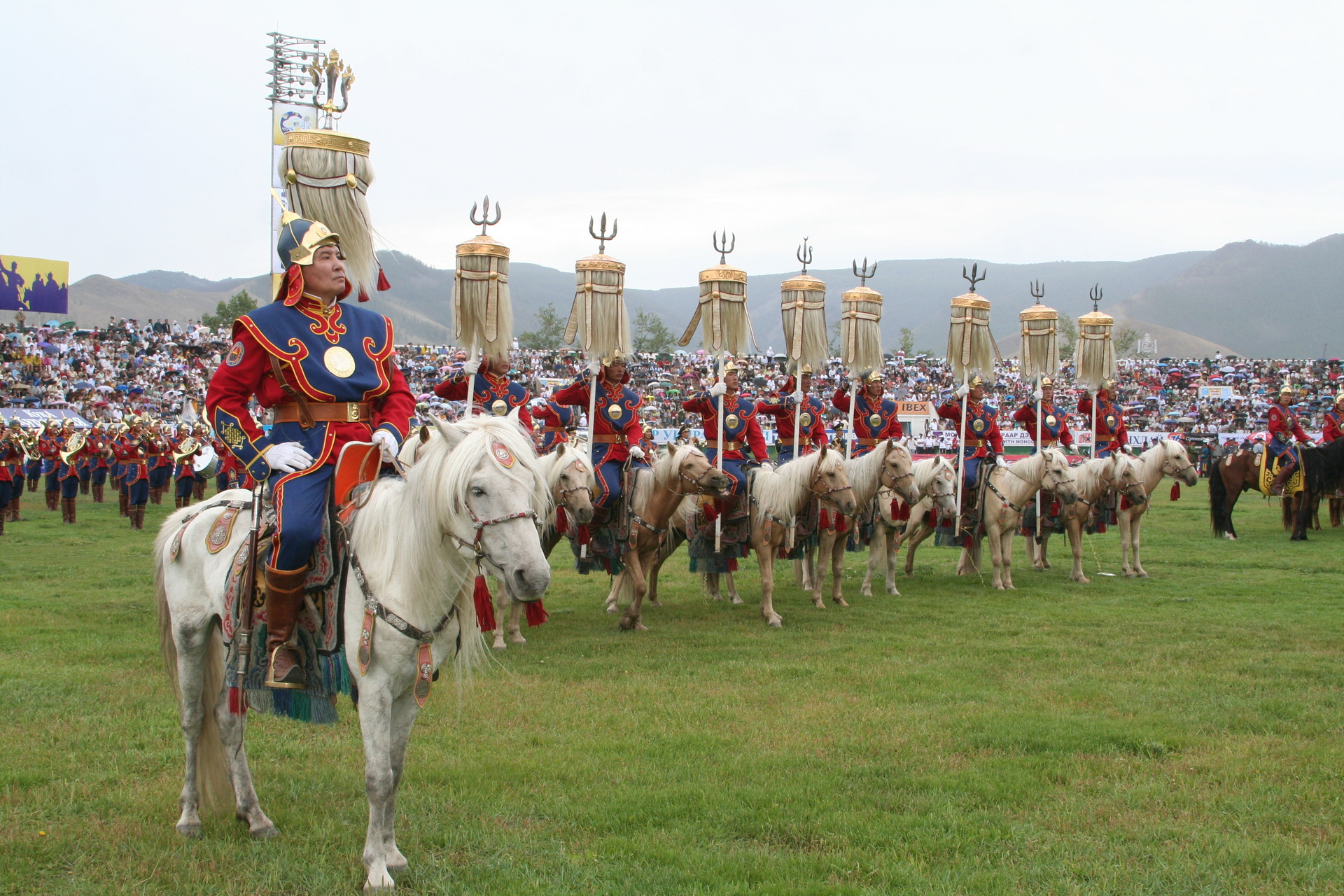
Naadam, Mongolia’s grandest national festival, is celebrated every year from July 11-13, bringing the country to life with its vibrant traditions and culture. This exciting event honors the spirit of the Mongolian people through impressive displays of athleticism, skill, and heritage. At the heart of Naadam are the “Three Manly Games”—wrestling, horse racing, and archery—each one deeply rooted in history and national pride.
Wrestling – Wrestling is the most beloved sport in Mongolia, so much so that when a son is born, it is a common wish from parents and grandparents for him to become a wrestler. This highlights the deep cultural significance of the sport, and every Mongolian eagerly watches the Naadam wrestling competitions.
At the start of the event, wrestlers enter the arena in a line, led by the highest titleholder. They wear traditional, decorated Mongolian boots, hats, and distinctive wrestling attire, including the zodog (a silk, open-fronted vest with long sleeves) and shuudag (tight-fitting trunks). Wrestlers earn prestigious titles such as Titan, Lion, Garuda, Elephant, and Falcon, each symbolizing strength and honor, with titles awarded during the Naadam festival.
To achieve a title, a wrestler must demonstrate exceptional skill and stamina. A victory in five consecutive matches earns the title of Falcon, while seven straight wins confer the title of Elephant. A wrestler who wins every match in the competition is crowned Lion, and a repeat champion the following year achieves the highest honor: Titan.
The competition is a thrilling showcase of wrestling techniques, with a variety of throws—some say there are hundreds—requiring not just strength but strategy and precision. In indoor competitions, wrestlers step onto a carpet and remove their hats as a gesture of respect. A wrestler is considered defeated if any part of his body, other than his feet or arms, touches the ground.
Unlike international freestyle wrestling, weight categories are not a factor in Mongolian wrestling, making each match a true test of strength, skill, and technique.
Horse racing – Mongolians have a deep connection with horses, having been born on their backs for centuries. Horse racing is not just a sport; it’s a cultural legacy that runs through the veins of the Mongolian people. Over the years, a unique and thrilling system of races has evolved, with events taking place during major national festivals like Naadam.
Races are divided into six age groups, with distances ranging from 15 to 30 kilometers. These races are held on the vast, open steppe, with no special tracks—horses race across natural terrain, jumping over obstacles as they charge forward. Before each race, riders sing the ancient war song Giingoo, a powerful ritual that sets the stage for the competition.
Mongolian horse racing is a thrilling competition that showcases the incredible stamina and speed of the nation’s prized steeds. Races are divided into distinct age groups, and the race distances can vary depending on the weather conditions of the day, ensuring the welfare of the horses is prioritized.
The different age groups and their race distances:
Riders start at the finish line and race back to it, effectively doubling the distance. Competitions can be held on both saddled and unsaddled horses, with participants being horses at least two years old. The winner is celebrated with a traditional cup of airag (fermented mare’s milk), which is sipped and then sprinkled on the horse’s head and croup as a sign of respect and honor.
After the race, a praise-singer honors the riders and their horses, extolling their skill and endurance. This centuries-old tradition remains a vibrant part of Mongolian culture, bringing together the love of horses, the spirit of competition, and the pride of a nation.
Archery – Archery is a sport deeply rooted in history and precision. The ancient Mongolian target immortalizes the incredible record of Yesuhei-Baatar, whose arrow famously hit a target from an astounding 536 meters away. The bow itself dates to the Mesolithic period, and the Mongols have long been renowned for refining the design of the bow as a powerful combat weapon.
Today, Mongolian archery, though less complex than its ancient form, still requires immense skill. The target, a “wall” made of cork cylinders braided with leather straps, is four meters long and 50 cm high. The competition takes place at 75 meters for men and 60 meters for women. Archers shoot with bows that require between 22-38 kg of force to draw. Historically, three types of bows were used: the “big hand” (165-170 cm), the “average hand” (160 cm), and the “small hand” (150 cm), with the “average hand” bow being the most common today. Arrows are crafted from pine wood and fitted with feathered fins, allowing them to soar up to 900 meters.
Naadam archery attracts both individual competitors and teams of 8-12 people. Each male archer is given 40 arrows to shoot at the target. Judges, dressed in traditional national attire, stand by the targets, raising their hands after each shot and praising the best marksman in a recitative voice. The event is accompanied by vibrant national rituals, with the chanting of the “uukhai” song before the competition, calling on the archers to aim true and hit their mark.
Mongolian archery isn’t just a contest of strength, but a celebration of heritage, precision, and skill that has been passed down through generations.
Mongol New Year – Mongolia celebrates Tsagaan Sar, or “White Month,” to mark the Lunar New Year, rooted in its ancient 12-year animal cycle. Tsagaan Sar, a time to honor happiness, purity, and the abundance of milk products, usually falls between late January and early March, aligning with the moon phases.
Preparations start nearly a month in advance. Mongolian families clean their gers and prepare abundant gifts and food, especially buuz (dumplings), often making hundreds. New deels (traditional robes) are sewn, and the finest sheep is slaughtered for the celebration, with its tail and lower back served throughout the holiday, symbolizing family wealth and prosperity.
New Year’s Eve, called “Bituun,” is marked with a feast, including dishes like “ul boov” (traditional bread), “berees” (sweetened rice), and a range of dairy products. Some families hide coins in buuz, bringing luck to those who find them. The next morning, everyone rises early to greet the sun and take the first steps of the year in directions determined by their birth year for luck and health.
Family greetings begin with the oldest member and involve exchanging silk scarves and milk cups, showing respect and love through this ritual. The celebrations continue with food, airag (fermented milk), vodka, and Mongol milk tea. Visitors arrive throughout the day to exchange gifts and inquire about the winter health of livestock, honoring this 15-day tradition that embodies the spirit of Tsagaan Sar.
Golden Eagle Festival
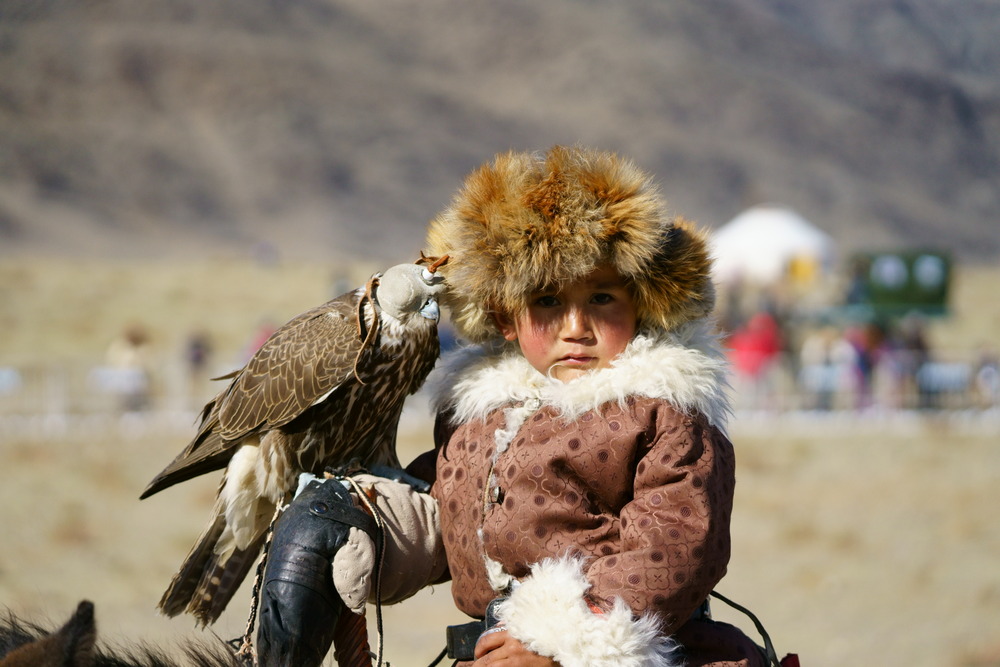
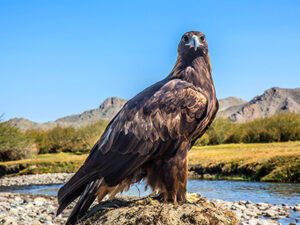
The Golden Eagle Festival, held annually in Bayan-Ulgii Province, Western Mongolia, celebrates the ancient art of eagle hunting and the unique cultural heritage of Mongolian and Kazakh nomads. This two-day event, organized by the local Golden Eagle Hunter’s Association since 1999, showcases the remarkable skill and bond between hunters and their golden eagles.
The festival’s main attractions are two competitions: the eagle training competition and the eagle hunting competition. In the training event, eagles demonstrate their agility, obedience, and responsiveness by soaring from the sky to their handlers and capturing lures. The hunting competition, the festival’s highlight, tests the eagles’ ability to track and catch prey as hunters, on horseback, navigate the mountains with their skilled birds.
These events require immense teamwork and years of dedicated training, honoring the ancient Kazakh tradition of eagle hunting while promoting eco-tourism in this stunning and remote region. Plan your visit to experience this breathtaking display of heritage, skill, and adventure in Mongolia’s rugged landscape.
Ice Festival
While Mongolia is known for its harsh winters, the snowy, mountainous landscapes of Khuvsgul Province offer a magical winter experience you won’t want to miss. Set against the sparkling clear ice of Lake Khuvsgul—the country’s largest freshwater lake—the annual Ice Festival transforms this stunning location into a playground of winter activities and cultural celebrations.
The Ice Festival, held each February or March, offers a unique mix of traditional Mongolian games and thrilling competitions on the lake’s frozen surface. Locals and nomadic reindeer herders gather to compete in ice-skating races, sumo wrestling, tug-of-war, horse sled races, and even a Russian jeep race on the ice. Spectacular performances by shamans, musicians, and athletes add to the excitement, making this an unforgettable cultural experience.
Visitors can join in traditional games, or enjoy fun rides like ice slides, ATV rides, and horse sledding. With daytime temperatures ranging from -5°C to -10°C (23°F to 14°F), the Ice Festival provides the perfect way to embrace Mongolia’s winter while surrounded by breathtaking scenery. Don’t miss this chance to dive into the winter wonderland of Khuvsgul Lake and experience the warmth of Mongolian hospitality.
Camel Festival
The Camel Festival, one of the world’s most celebrated winter events, brings life to the sweeping deserts of Mongolia’s Umnugovi (South Gobi) Province each year. Organized by a local organization dedicated to preserving the dwindling population of Bactrian camels, the festival is both a thrilling cultural celebration and a powerful effort to safeguard this unique species.
Home to the world’s largest Bactrian camel population, Southgobi province hosts thousands of nomads who arrive in traditional dress, riding their finest camels to showcase the importance of camel culture in Mongolia. Highlights include the record-breaking “Mongolian Camel-999” race, where Mongolia earned a Guinness World Record with 1,108 camels finishing a 15-km course—surpassing China’s previous record of 555 camels.
The festival opens with a grand camel parade, followed by exciting competitions such as camel races, camel polo tournaments, and beauty contests, where camels are judged for their size, fur quality, and overall appearance. Folk performances by local musicians and dancers bring even more vibrancy to the event, while the birth of a baby camel at one recent festival was taken as a joyful omen for the species’ future.
Attending the Camel Festival offers a rare glimpse into the nomadic lifestyle, prehistoric sites, and local traditions of the Gobi Desert. Not only does it provide a unique and immersive experience, but it also supports local communities and helps preserve the heritage and future of the Mongolian Bactrian camel.
Horse Festival
The Winter Horse Festival, held in Chinggis City, Khentii Province, is a unique celebration dedicated to Mongolia’s rich equestrian culture and heritage. This annual November event, set in the birthplace of Chinggis Khan, invites visitors to experience authentic Mongolian traditions while supporting local communities and promoting winter tourism in this lesser-known region.
Over two days, horse herders and trainers from across Mongolia gather to showcase their skills and the deep-rooted connection they share with their horses. The festival features thrilling horsemanship contests, a children’s parade on horseback, and a horse-themed song competition, bringing Khentii’s legendary horse culture to life.
In addition to the equestrian events, the festival highlights eastern Mongolia’s unique hunting traditions. Guests can observe local hunters using sleek, agile hunting dogs—similar to Greyhounds—trained to pursue game such as foxes, wolves, and gazelles. This hunting practice, vital to herders, helps them manage livestock populations sustainably, reducing the need for culling and enhancing food security for rural families.
Beyond the excitement, the Winter Horse Festival offers visitors a rare glimpse into the herding lifestyle, underscoring the resilience of Mongolian culture. From horseback skills to age-old hunting methods, this event showcases the living heritage of the Khentii nomads and provides a fresh perspective on Mongolia’s diverse and enduring traditions.